CO2 capture and methanation with the energy system
Objectives
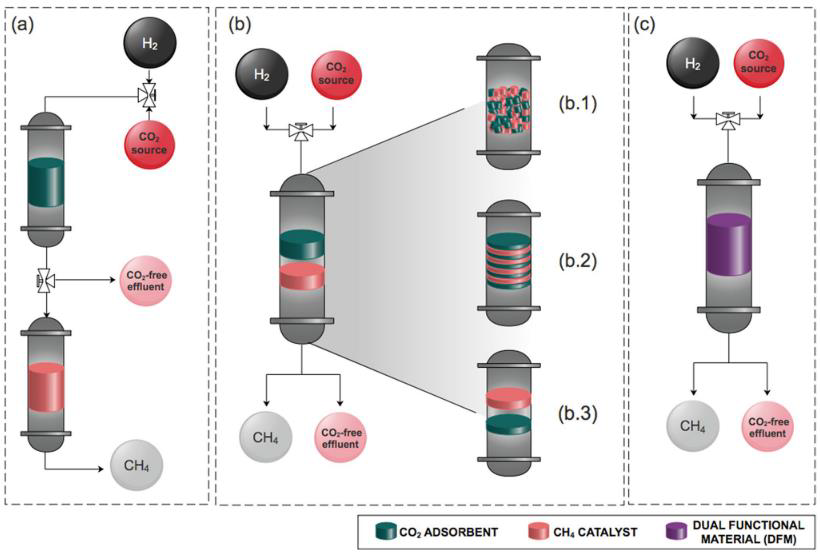
While integrating CO2 capture with conversion to syn-methane for seasonal storage seems to address several challenges of the energy transition at once, this promising concept is hampered by fundamental challenges at the system, the materials and the reactor level. A novel concept is introduced which couples CO2 sorbent regeneration and methanation into one combined process.
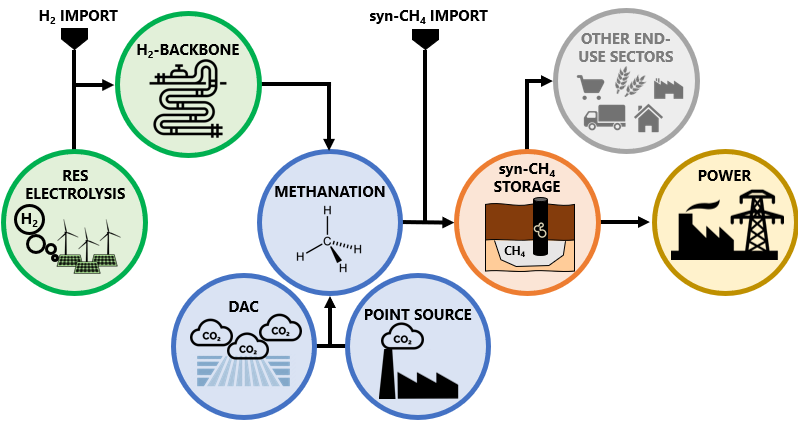
In summary, this project aims to improve the understanding of technological and economic hurdles and opportunities to integrate CO2 capture and methanation in the Belgian energy system, by using the available infrastructure and the planned hydrogen backbone of Belgium.
One of the goals of this project is to envision and model the supply-chain of this syn-methane from its production sites to the gas storage sites and to gas turbines using the existing gas grid, and analyse critical parameters that determine the feasibility of the proposed integrated CO2 capture and methanation process in the Belgian energy system.

System
The role of circular syn-methane for security of supply
The feasibility of using syn-methane in the liberalized Belgian energy system will be studied. Energy system modeling and scenario analysis are required to investigate how, when and where CO2 capture and methanation should be implemented.
The system model will take the Loenhout storage facility and abundantly available natural gas grid into account, and indicate required supplementary investments in infrastructure.
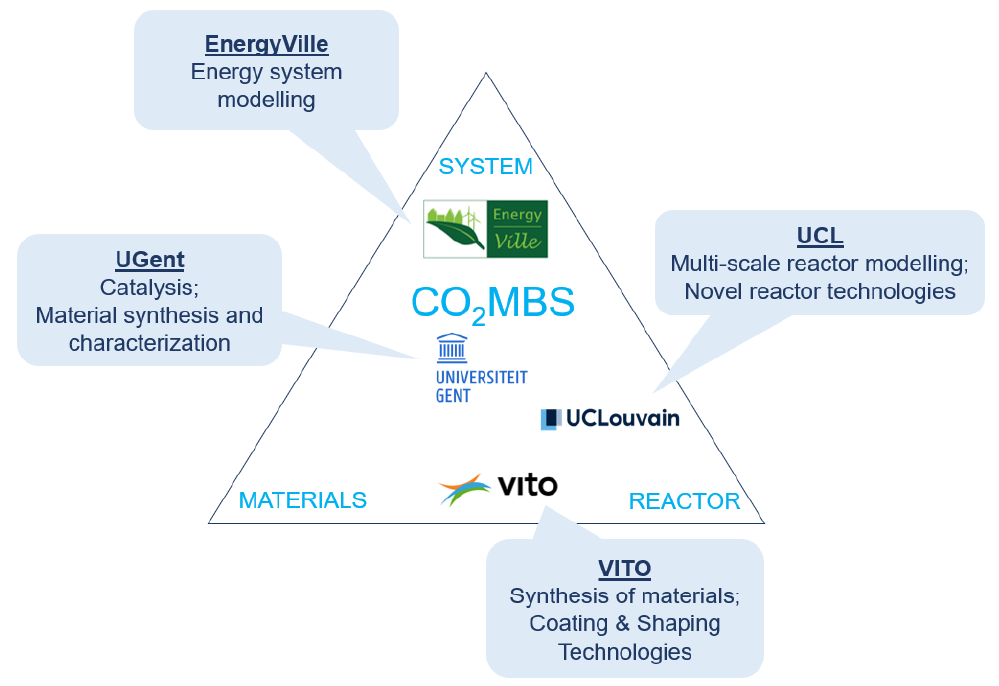
EnergyVille develops new technologies and builds knowledge to support public and private stakeholders during their transition into and energy-efficient, defossilized and sustainable climate.
Materials
Development of materials for integrated CO2 capture and coupled regeneration-methanation

When sorbent regeneration is coupled with methanation, the thermodynamic driving force for sorbent regeneration is provided by the reaction. This increases the overall energy efficiency of the process and consequently improves their applicability in the Belgian energy system. To couple these processes, they will need to operate at the same temperature and pressure conditions. This raises important material challenges for both the sorbent and the catalyst.
Reactor
Reactor configuration and design concepts for coupled regeneration-methanation
The potential reactor design concepts and operation for integrated regeneration-methanation will be evaluated, and criteria for the process integration in the system model and for the development of suitable materials will be provided. The applicability of different reactor types against targets set by the system model will be also evaluated.
The complexity of the coupled regeneration-methanation reactions has implications for the reactor selection and operation. The dynamic reactor operation must be taken into account when screening for potential reactor configurations. The dynamic character is aggravated by the energy system dynamics.